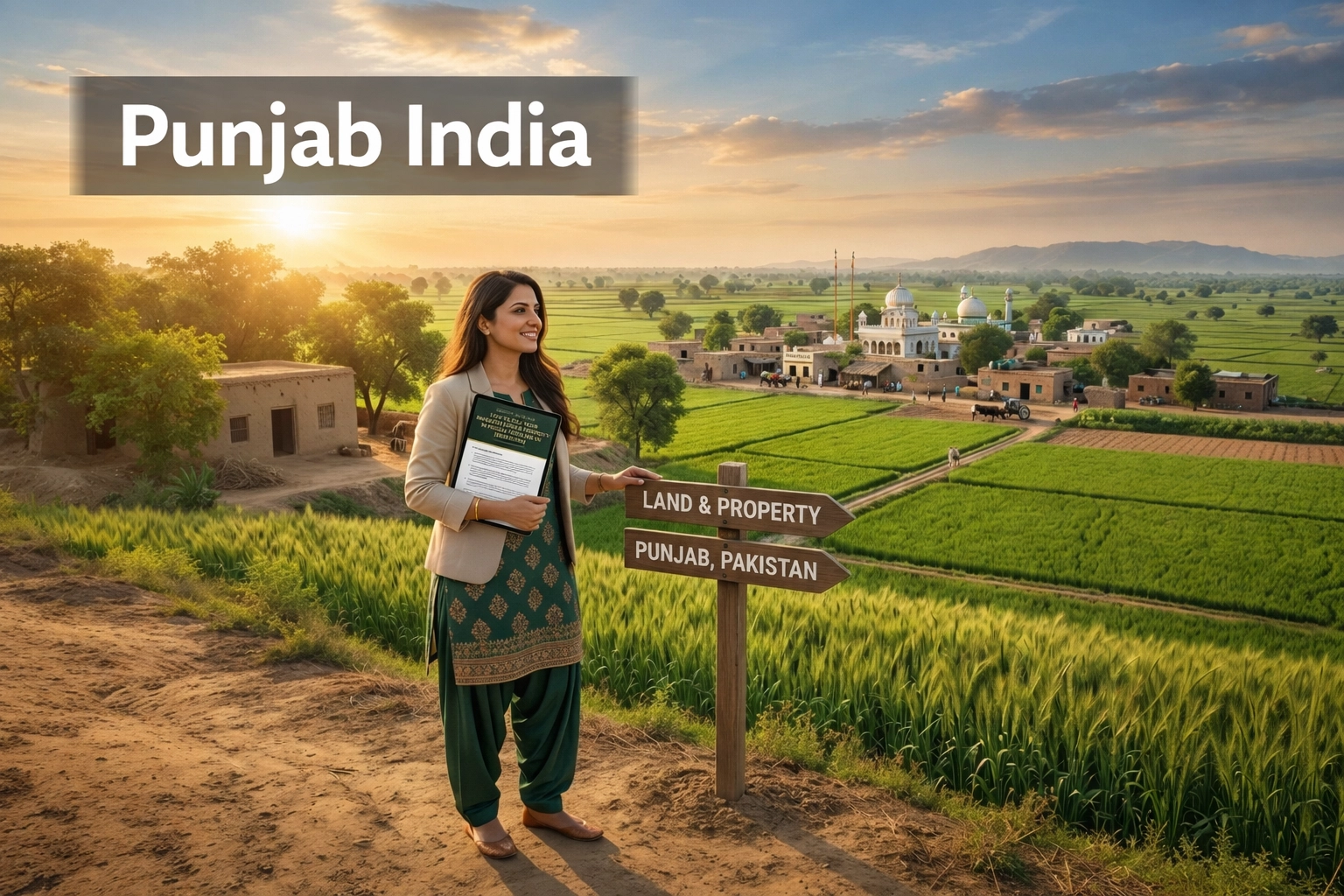
Inheriting land in India is often a bittersweet milestone for the UK-based NRI. On one hand, it represents a deep, ancestral connection to your roots, perhaps a vibrant patch of fertile soil in Punjab that has been in the family for generations. On the other hand, it can quickly become a logistical and legal labyrinth that feels impossible to navigate from thousands of miles away.
Between the intricate maze of Indian bureaucracy, the evolving tax regulations, and the physical distance, many NRIs find themselves holding onto "dead assets" that bring more stress than value. At The Property Buyers, we see this daily. Whether you’ve inherited a farmhouse near Jalandhar or a plot in Ludhiana, the goal is the same: transitioning from a state of legal uncertainty to financial clarity.
In this guide, we’ll break down the strategic steps required to sell your inherited land in India while living in the UK, ensuring you avoid the common pitfalls that trap so many.
The Foundation: Title Verification and the "Jamabandi"
Before you even think about putting a "For Sale" sign on your land (metaphorically or otherwise), you must establish a clear, undisputed title. In India, and particularly in states like Punjab, land records are maintained in a document known as the Jamabandi (the Record of Rights).
Title verification is the most crucial step because land in India is often plagued by "clouded titles." You might believe the land is yours because your grandfather told you so, but if the government records haven’t been updated in forty years, you don’t technically own it in the eyes of the law.
Verifying the title involves checking for:
- Encumbrances: Are there any existing mortgages or legal disputes (litigation) on the land?
- Correct Acreage: Does the physical boundary match the recorded measurement?
- Easement Rights: Are there any rights of way that third parties hold over the land?
For a UK NRI, doing this manually is a nightmare. It usually involves multiple trips to the Tehsil office and long discussions with the Patwari (village land record officer). This is where professional oversight becomes invaluable, as navigating these local nuances requires a boots-on-the-ground approach.
The Varisnama: Establishing Your Right to Sell
Inheritance does not automatically grant you the right to sell. To move forward, you must complete the process of Succession, which in many parts of India is initiated via a Varisnama (Legal Heir Certificate).
The Varisnama is a formal document that identifies the surviving legal heirs of the deceased owner. Once you have this, you must apply for a Mutation (Intakal). This is the actual process of changing the name in the government’s revenue records from the deceased person to the legal heirs.
Without a completed Mutation, the land remains in the name of your ancestors, and no legitimate buyer, or bank, will touch the deal. It’s a tedious process that often requires death certificates, identity proofs, and sometimes a "No Objection Certificate" (NOC) from other siblings or family members who might have a claim.
The Agricultural Catch: Who Can Buy Your Land?
A strategic reality that catches many UK NRIs off guard is the restriction on agricultural land. Under the Foreign Exchange Management Act (FEMA), while an NRI can inherit agricultural land, they are severely restricted in who they can sell it to.
In India, agricultural land, farmhouses, and plantation properties can only be sold to Indian residents. You cannot sell your inherited farm in Punjab to your cousin who also lives in Southall, nor can you sell it to a foreign national. This significantly narrows your pool of buyers and makes finding a trustworthy, local purchaser even more critical.
Managing the Process from the UK: The Special Power of Attorney (POA)
You don’t necessarily need to spend your annual leave sitting in a dusty government office in Punjab. Most NRIs manage the sale via a Special Power of Attorney (POA).
However, a standard POA drafted in a UK solicitor's office won't cut it. To be legally binding in India, the POA must be:
- Specifically Worded: It should limit the power only to the specific land parcel and the specific actions required (signing the sale deed, etc.).
- Attested: You must sign the document in the presence of the Indian Consulate or Embassy (in London, Birmingham, or Edinburgh).
- Registered in India: Once sent to India, the POA must be adjudicated and registered at the local sub-registrar's office to be valid for property transactions.
Choosing the right person to hold your POA is a decision of immense weight. It should be someone who understands the local market and has the integrity to act in your best interest.

Taxes and the Maze of Repatriation
Selling the land is only half the battle; getting the money back to the UK is the other half. When you sell inherited property, you are liable for Capital Gains Tax in India.
A common point of confusion is the "acquisition cost." Since you inherited the land, your "cost" is technically what the original owner paid for it, adjusted for inflation (indexation). However, as of recent 2025/2026 tax updates, the rules around indexation benefits for NRIs have become more complex.
Key financial hurdles include:
- TDS (Tax Deducted at Source): The buyer is legally obligated to deduct tax (often at a high rate for NRIs) before paying you. You may need to apply for a Lower Tax Deduction Certificate to avoid having too much cash tied up with the Indian Tax Department.
- The NRO Account: Sale proceeds must be deposited into a Non-Resident Ordinary (NRO) bank account.
- Repatriation: Under FEMA, you can repatriate up to $1 million per financial year from your NRO account to the UK, provided you have the necessary 15CA and 15CB forms signed by a Chartered Accountant.
Why Selling Inherited Land in Punjab is Uniquely Challenging
While the laws are national, the reality in Punjab is local. NRIs often face specific "vibrant" challenges:
- Encroachment: Empty land is a magnet for "unauthorized occupation." Sometimes, distant relatives or local strongmen might start farming your land or build a boundary wall, making it incredibly difficult to sell until the land is cleared.
- The "Middleman" Culture: Traditional property dealers in rural areas often lack the professional transparency required for international transactions.
- Valuation Discrepancies: There is often a gap between the "Circle Rate" (government value) and the "Market Rate," which can complicate the legal documentation and tax filings.
How The Property Buyers Make It Simple
At The Property Buyers, we specialize in bridge-building between the UK and India. We understand that for a UK NRI, selling land in Punjab isn't just a transaction; it's about peace of mind.
Our specialized service for selling land and property in Punjab is designed to remove the burden from your shoulders. We handle the heavy lifting, from title verification and succession paperwork to finding legitimate resident buyers.

We offer:
- Direct Purchases: In many cases, we can facilitate a quick cash sale, bypassing the months of waiting for a private buyer.
- Legal Expertise: We understand the Varisnama and Mutation process inside out.
- Transparency: No hidden fees or complex jargon, just clear, professional guidance from Baggy Tiwana and the team.
If you’re tired of worrying about your land in India or are struggling to navigate the land sale process from abroad, we are here to provide a strategic exit.
Final Thoughts: From Burden to Liquidity
Selling inherited land in India doesn't have to be a decade-long saga of frustration. By approaching the process with a focus on title clarity, following the correct succession steps, and utilizing a professional partner, you can unlock the financial potential of your ancestral assets.
The transition from a state of "I have land in India I don't know what to do with" to "I have the funds in my UK account" is a path we walk with our clients every day.

Frequently Asked Questions
1. Can I sell my inherited land if I don't have the original papers?
Yes, but it’s harder. We would need to apply for certified copies from the revenue department in India to reconstruct the title chain.
2. How long does the Varisnama and Mutation process take?
Typically, it can take anywhere from 3 to 6 months depending on the local office and whether there are any disputes among heirs.
3. Do I have to pay tax in both India and the UK?
The UK and India have a Double Taxation Avoidance Agreement (DTAA). While you may have to report the gain in both countries, you can usually claim credit for the tax paid in India against your UK tax liability.
4. Can I sell my land to my brother who is also a UK NRI?
If the land is classified as agricultural, no. It must be sold to an Indian resident.
Ready to start the process? Visit our specialized Punjab property page for a no-obligation consultation. Let’s get your inheritance working for you.