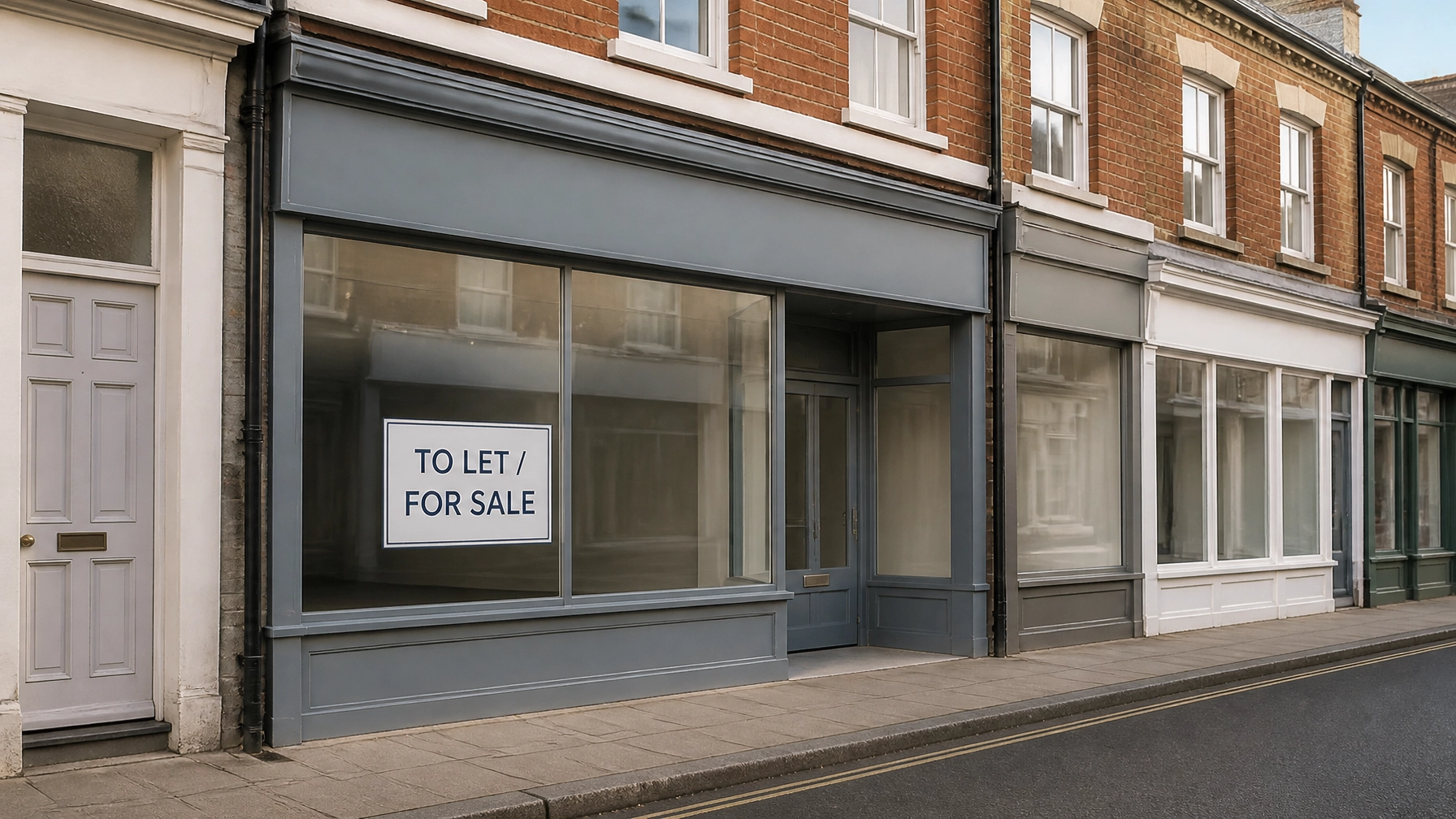
If you own an empty office, shop, warehouse, healthcare building, leisure premises, mixed-use property, land or development site, a slower commercial market can create pressure from several directions at once. Viewings may be limited, buyers may negotiate more aggressively, and every month without a tenant or completed sale can increase your exposure to business rates, insurance, maintenance and finance costs.
As autumn approaches, many owners are therefore considering whether to sell commercial property fast, rather than continue waiting for market conditions that may or may not improve. Timing is never certain, and there is no reliable way to guarantee future prices, but a careful comparison of your options can help you move from uncertainty to a commercially sensible decision.
What is happening in the UK commercial property market?
The UK commercial market is not behaving uniformly across every sector or region. Demand for prime, well-located assets and industrial or logistics property may be more resilient, while secondary offices, retail units and some leisure premises can face longer marketing periods and more cautious buyers.
Recent market indicators reflect this selective environment. The Rightmove Commercial Insights Tracker reported differing levels of leasing and investment demand across offices, retail, leisure and industrial property, while the RICS UK Commercial Property Monitor provides further insight into occupier sentiment and market conditions. The Landmark Commercial Property Trends Report also highlights how transaction activity and due diligence can soften when buyers become more cautious.
This does not mean that every commercial property should be sold immediately. A well-let warehouse in a strong logistics location may warrant a different strategy from an empty office above a struggling retail parade. The crucial question is not simply whether the market is slow, but how the current conditions affect your property, your cash flow and your objectives.
The hidden cost of holding an empty commercial property
An empty property can appear inexpensive to hold if there is no mortgage or major repair project, but the combined carrying costs can become substantial over time.
1. Business rates
Empty property relief is usually limited. In many cases, standard commercial premises receive three months of relief, while qualifying industrial premises may receive six months, after which the owner can become responsible for full business rates. Exemptions and reliefs may apply depending on the property, its rateable value, its condition and the circumstances of the owner, so you should confirm the position with the relevant local authority or a qualified adviser.
Once relief expires, business rates can become one of the most significant costs of leaving a unit vacant, particularly where there is no rental income to offset the liability.
2. Insurance and security
Vacant buildings may require specialist insurance, additional inspections, alarms, boarding, security patrols or other protective measures. Insurers can impose conditions relating to heating, inspection frequency and unoccupied periods, and failing to comply with those conditions may affect cover.
3. Maintenance and deterioration
A vacant commercial property still needs to be kept secure, weatherproof and compliant. Roof leaks, drainage problems, vandalism, damp, broken glazing and plant failures can develop into expensive issues if they are not identified quickly. Even a property that was in good condition when vacated may require ongoing cleaning, landscaping and repair work.
4. Finance and opportunity cost
If the property is mortgaged, interest continues regardless of whether the building is producing income. A stalled sale can also prevent you from releasing capital for another investment, settling a business liability or resolving a personal financial matter.
Calculate the total monthly cost of holding the property, rather than looking only at the asking price. A lower but certain sale may, in some circumstances, leave you in a stronger financial position than a higher theoretical valuation that takes many months to achieve.

Tenant and lease complications can slow a sale
A tenanted commercial property is not necessarily difficult to sell, but the lease structure will affect the buyer pool, valuation and transaction process.
Potential buyers may want to understand:
- The tenant’s financial strength and payment history
- The length of the remaining term
- Break clauses, rent reviews and renewal rights
- Repairing obligations and service-charge arrangements
- Any rent arrears, concessions or side agreements
- Whether the lease has been properly documented and registered
- Whether the property is sold with vacant possession or subject to the tenancy
If a tenant is struggling, in arrears or refusing access, the situation can become more intricate. A buyer may price in the cost and time involved in resolving the issue, while a lender may require additional information before approving finance.
Before marketing, gather the lease, licences, rent schedule, correspondence, compliance documents and details of any disputes. If the property is occupied, obtain specialist legal advice before serving notices, negotiating surrender or making promises about vacant possession. A rushed or poorly documented tenancy decision can create greater delay rather than speeding up the sale.
Why traditional commercial sales can stall
The traditional estate-agent route can work well when a property is correctly priced, finance is readily available and the buyer pool is active. However, a sale may stall when:
- The asking price reflects historic market expectations rather than recent evidence.
- The property has defects, planning uncertainty or an unusual layout.
- The lease is complex or the tenant’s position is unclear.
- The marketing reaches only a narrow group of potential buyers.
- The buyer’s finance or valuation falls through.
- Surveys, title checks or environmental reports reveal unexpected issues.
- The owner is unwilling or unable to complete within the buyer’s preferred timescale.
If you are seeking a fast property sale UK owners can explore privately, it is important to understand the trade-off. A cash buyer may offer greater certainty and a simpler process, but the offer will reflect the property’s condition, location, income, legal position, required works and the buyer’s assessment of risk. A cash sale is not automatically the highest-value route, nor is it right for every owner.
Compare your options before deciding
A structured comparison can prevent an emotional or rushed decision.
Hold
Holding may be sensible if the property is well positioned, financially manageable and likely to benefit from active demand in its sector. You should still set a review date and calculate how much the property will cost to retain through the autumn and beyond.
Let
Letting can create income and reduce vacancy-related costs, but it may require refurbishment, incentives, rent-free periods, agent fees or a lengthy search for a suitable tenant. A new lease can also affect your flexibility if you later decide to sell.
Refinance
Refinancing may release capital or reduce short-term pressure, but lending criteria, interest rates, loan-to-value limits and the property’s income profile will all be relevant. Professional mortgage and tax advice is essential before relying on this strategy.
Sell through an agent
An agent-led sale may achieve a strong price if you can tolerate uncertainty and a potentially longer timetable. Obtain a realistic valuation based on comparable evidence, not simply the figure you would prefer to achieve.
Sell property for cash
A direct cash sale may be worth considering when speed, privacy and certainty are more important than testing the entire market. This can be particularly relevant for empty or hard-to-market premises, properties requiring significant work, buildings with complicated tenancies, or owners facing finance, probate, divorce, partnership or business pressures.
For further background, read How Selling Commercial Property Works in the UK Market and Value Commercial Property for a Quick, Profitable Sale.
How to sell commercial property fast with The Property Buyers
The Property Buyers considers commercial and semi-commercial property throughout the UK, including offices, shops, warehouses, healthcare properties, mixed-use buildings, leisure premises, land and development sites. Properties may be considered in a range of conditions and circumstances, subject to assessment.
The process is designed to be direct and discreet:
- Make an initial enquiry
Contact the team with the property address, your preferred timescale and a brief description of the building, land, tenancy and any known issues. - Discuss the property and circumstances
A valuer can review the property, its condition, income position, legal complications and your reasons for selling. You should disclose relevant information at this stage so that any proposal is properly informed. - Receive a written cash offer
Where the property is suitable, The Property Buyers aims to provide a written offer within hours. The amount will depend on the property and the circumstances, and you remain free to compare it with other options. - Instruct solicitors and agree the timetable
If you accept, solicitors handle the legal work, title checks, lease review and enquiries. The company states that exchange can take place in around two days, with completion in less than 20 days where the transaction is straightforward and all parties are ready. - Complete and receive the proceeds
On completion, ownership transfers and the sale proceeds are sent to your solicitor or nominated account, subject to the agreed legal process.
The Property Buyers also states that it can cover administration, survey and legal fees in qualifying circumstances, and may be able to discuss flexible arrangements such as sale and rent-back. These terms should always be confirmed in writing, and independent legal advice is recommended.

Frequently asked questions
Is now the right time to sell commercial property in the UK?
There is no universal answer. Market timing depends on the property type, location, tenant position, condition, debt and your personal or business objectives. If holding costs are high and there is no clear letting or price-growth strategy, selling may provide greater certainty.
Can I sell a commercial property with a tenant in place?
Yes, tenanted commercial property can be sold, but the lease and tenant information will influence the valuation and buyer interest. If you need vacant possession, obtain legal advice before taking action.
Can I sell an empty shop or office for cash?
Potentially. A direct cash buyer may consider empty offices, shops and other commercial buildings, but every offer depends on factors including location, condition, planning, title, business rates and redevelopment potential.
Will a cash buyer pay market value?
A cash offer is based on the buyer’s assessment of value, risk, costs and required return. It may be below an optimistic open-market asking price, but it can provide speed and reduce the uncertainty associated with a prolonged sale. Obtain independent advice if you are unsure whether an offer is suitable.
What documents should I prepare?
Useful documents include title information, leases and licences, rent schedules, business rates details, EPC and asbestos information where relevant, planning documents, service-charge records, insurance details, accounts and information about any disputes or arrears.
Final thoughts
A commercial property slump does not make every sale urgent, but it does make disciplined decision-making more important. Before autumn, calculate the true cost of holding the asset, review tenant and lease complications, obtain realistic pricing evidence and compare holding, letting, refinancing and selling on their practical merits.
If a private, fast property sale UK solution could help you release capital and reduce ongoing exposure, you can contact The Property Buyers for a no-obligation discussion. Any offer will depend on the property and your circumstances, but a clear conversation can help you establish whether selling commercial property or pursuing another route is the most practical next step.
Discuss your commercial property sale
For details of the properties we consider, visit our commercial property buying service. If you are selling several rental properties, see our property portfolio selling service.
To discuss an empty, tenanted or mixed-use property, request a no-obligation discussion. Please include the property address, occupancy, any known issues and your preferred timescale so the team can assess your enquiry.